The Cost Nobody Prints · Northern Ireland · feed phosphorus and Lough Neagh
The Feed Crossed the Border. The Lough Got the Leftovers.
Most phosphorus used on Northern Ireland farms arrives in concentrated feed, while the rules still spend more time managing what comes out the other end. Lough Neagh carries part of the unpaid bill.
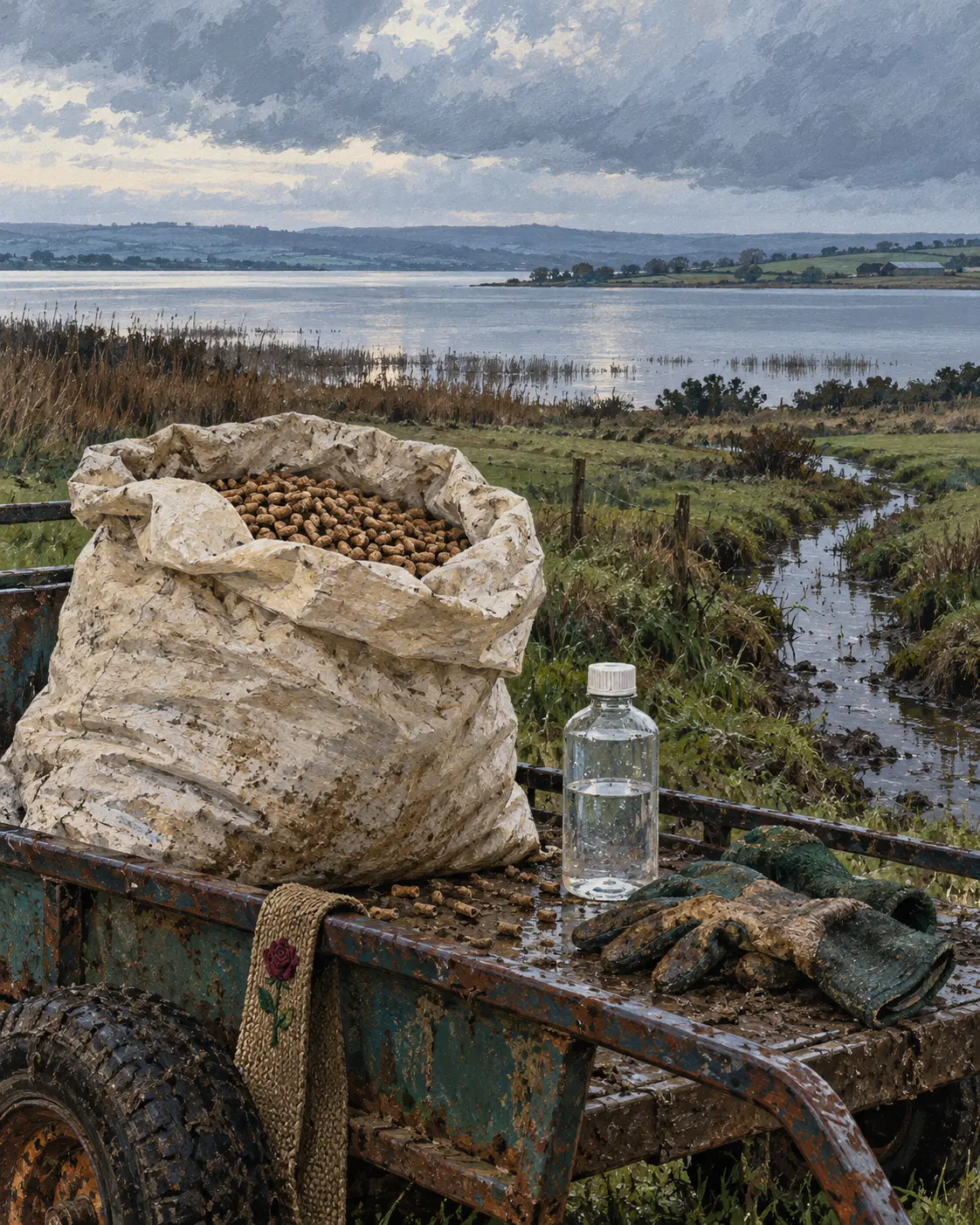
A feed pellet is a tidy little thing. Dry, measured and easy to invoice. The phosphorus inside it is less well behaved.
Northern Ireland's environmental watchdog says concentrated animal feed supplies about 80% of the phosphorus used on farms. Chemical fertiliser supplies roughly 20%. Animals keep what they need. The excess passes into manure, builds in soil and can wash towards water. It is not wizardry. It is plumbing with a purchase order.
The number is an input, not a verdict
That 80% is a share of farm phosphorus inputs. It does not mean feed causes 80% of Lough Neagh's pollution. Wastewater, septic tanks and urban drainage matter too. Any bloke offering one neat villain for a sick lake is selling a bumper sticker, not an explanation.
The contradiction is still sharp. The Office for Environmental Protection says the rules have focused heavily on manure and fertiliser while barely controlling the phosphorus and crude protein arriving in feed. High-output livestock, feed, processing and retail systems gain from that throughput. The residue lands with farmers trying to manage it, water workers, fishers, wildlife and communities around the lough.
The lough's ecological condition is officially bad. Public warnings have closed bathing water, and yellow-eel fishing is shut for three years under a stock-recovery decision. Do not turn that into a cheap causal trick: the department did not say algae alone caused the eel closure. A bruised ecosystem can carry more than one wound at once.
Government has proposals. The feed gap remains.
DAERA accepts that agriculture and wastewater both need stronger action. Its proposed 2027–2030 programme includes a national phosphorus-surplus target, tighter farm measures, advice and enforcement. The regulator welcomed parts of it but warned that direct feed controls were still missing and that hoped-for manure-processing capacity may not arrive in time. On 15 October, DAERA's public record still showed a closed consultation and supporting papers, not final regulations. That is the honest line until government publishes another one.
The Ulster Farmers' Union says farmers are already changing practice and cannot carry the whole bill. Fair enough. Small farms did not write the retail contracts, design the wastewater network or set the feed rules. Repair has to reach the people holding the shovel, not just the people holding the blame.
A live decision beside the lough
Mid Ulster District Council currently lists application LA09/2026/0163/F for two sheds holding 49,000 broiler chickens near Moneymore. The council says objections and comments are logged and considered before a decision. Irish News reported that the birds would be supplied for Moy Park processing and that the applicant says litter would be collected for anaerobic digestion rather than spread on fields; agencies had asked for more information about odour and drainage. Those are material details. They are not proof that this proposed unit caused the lough's existing pollution.
Save Lough Neagh supports the campaign against the proposal. The petition's pollution and planning arguments are campaign claims, not findings of this article. Read them beside the official application. If you have a relevant planning point and accept that your name and postal address will be published, the council says you may comment until it makes a decision.
A lake should not be the final drawer in the nation's filing cabinet. Enough is enough. Count what comes in, make the powerful actors share the cost of changing it, and let the water become water again.
I’ll leave you today with a line from W. B. Yeats, The Lake Isle of Innisfree:“I hear lake water lapping with low sounds…”
Sources & ways to help
How to help: read and, if relevant, comment on the live application →Official Mid Ulster District Council page for LA09/2026/0163/F; checked 15 October 2026. The council warns that comments, names and postal addresses are published online.
Read the current campaign petition →The petition was open with 1,670 verified signatures at the 15 October check. Its claims belong to the campaign; The Rose Mission has no partnership with it.
See Save Lough Neagh's public action hub →Current coalition hub linking its demands and campaigns. Independent coverage, not endorsement or partnership.
Read the environmental watchdog's nutrient-regulation review →Primary Office for Environmental Protection report laid before the Northern Ireland Assembly on 29 April 2026.
Read DAERA's current 2027–2030 programme record →Government supporting documents page last updated 10 August 2026; checked again 15 October.
Read the reporting on the application and applicant's waste plan →Irish News, 8 April 2026. Provides application details, campaign claims and the applicant's stated litter-management plan.
Read the independent report and farm-sector response →BBC reporting on the regulator's findings and the Ulster Farmers' Union response.
Verify the closing line in The Lake Isle of Innisfree →
Follow the thread