The Cost Nobody Prints · England · Hillhouse PFAS contamination
The Egg Was Breakfast. Then It Became Evidence.
A duck egg, 49 blood tests and the Lancashire residents turning decades of PFAS records into something their neighbours can use.
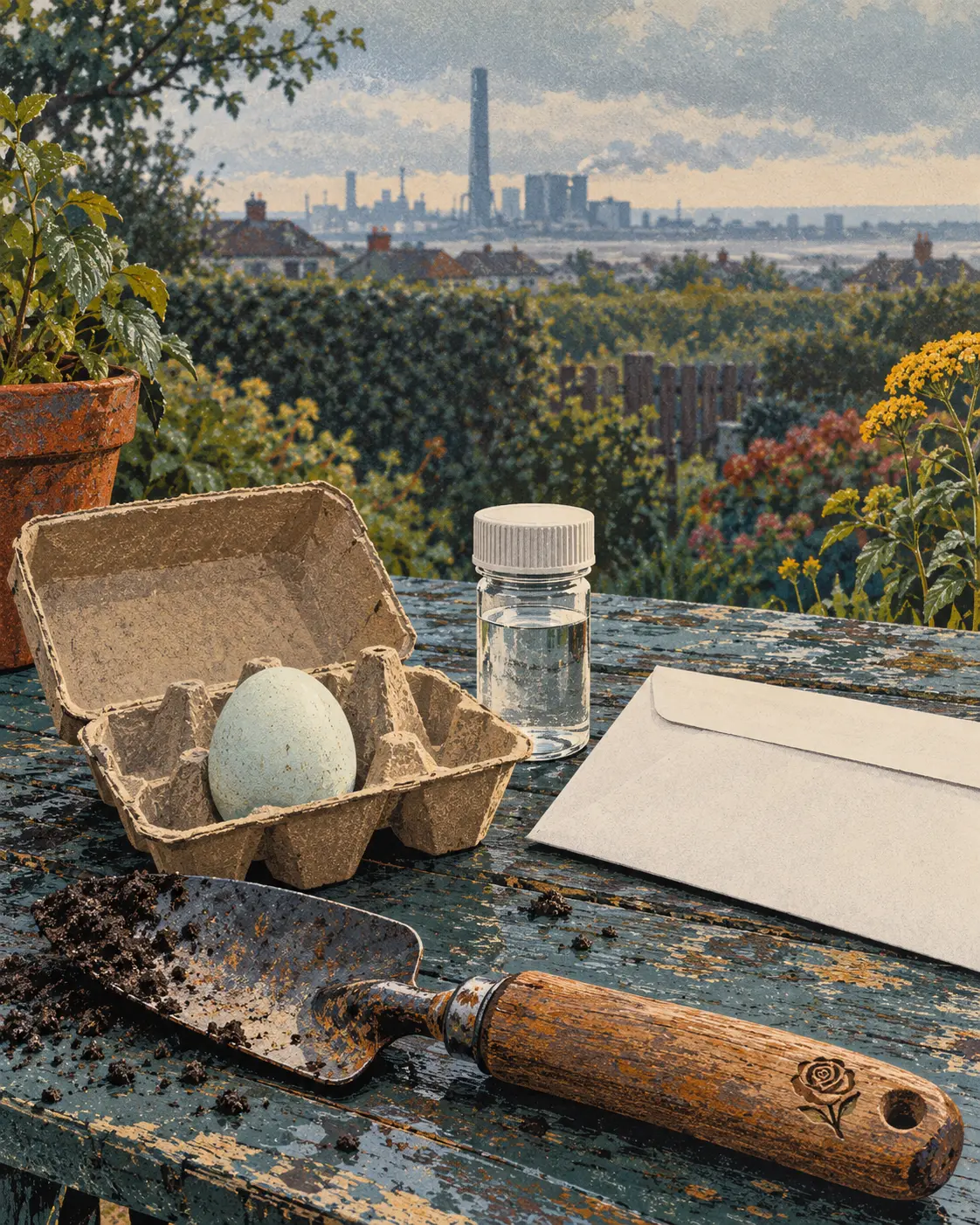
Last February, Wyre Council hand-delivered a letter to Thornton-Cleveleys resident Sam Hammond. Her pet ducks' eggs, raised in the garden, contained PFAS chemicals. The Guardian later reported that eating one tested egg a week would have exceeded the European tolerable weekly intake ten times over. Breakfast had become evidence.
There is no clever metaphor required here. A family kept ducks. An industrial chemical crossed the fence. The letter arrived after the eating.
The fence did not hold
PFOA, one chemical in the larger PFAS family, was used at the Hillhouse works from the 1950s until 2012. ICI operated the works for much of that period; AGC Chemicals Europe acquired the fluoropolymers business in 1999 and phased PFOA out in 2012. Wyre Council says the use complied with the permits and UK law of the time. Legal, permitted and gone are three different words. None means cleaned up.
The Environment Agency began the current inspection after AGC supplied historic estimates showing releases to air, land and water. PFOA has since been found in local soil and produce. Council testing at Occupation Road allotments found it in every soil sample and most vegetables collected there; both nearby allotment sites are now closed. The industrial benefit was useful non-stick material. The bill turned up in gardens. Chemistry can be very modern that way: the product travels out; the cost stays home.
What 49 blood tests can—and cannot—say
On 23 September 2026, 49 residents selected for proximity, years lived nearby and local food habits received results from blood tests arranged by the law firm Leigh Day with Manchester Metropolitan University researchers. Published accounts agree that nearly 70% were above 20 nanograms per millilitre, but describe the measure differently: The Guardian reports combined PFAS, while Leigh Day labels it PFOA. The US guidance applies to the sum of seven PFAS. Until the underlying data resolves that difference, it belongs in the story. Either way, 20 is not a UK diagnostic threshold, and these 49 people are not a random sample of the town.
Lancashire's multi-agency Health Cell says a PFAS blood test cannot identify where exposure occurred, prove that PFAS caused an illness or predict a person's future health. Its kidney-cancer review found no evidence of a cluster or an environmental link and recommended no further cluster investigation at this stage. The council also says evidence remains inadequate to determine whether long-term exposure from local industrial sites causes adverse health effects in nearby English communities. Those cautions matter. So does the measured contamination that started the investigation.
The company response—and the unfinished job
AGC says the blood-test data was not shared with it, notes the government's warning about what such tests can predict, and says many operators used this industrial site before AGC arrived. It supports the multi-agency inquiry and has commissioned staged testing of soil, groundwater and surface water on land it owns. In June 2026, that work moved into a second stage. No final off-site risk assessment or allocation of responsibility has been published.
That is the honest position: established releases, established detections, unsettled boundaries, contested health meaning and an investigation still moving through the gears. Enough is enough does not mean inventing certainty. It means refusing to let uncertainty become a sofa.
The neighbour with the paperwork
Hillhouse Watch is doing the unglamorous repair work of public information. The independent, volunteer-run site is maintained by a local resident. It plainly discloses that the organiser is a Leigh Day client, links claims to original documents, keeps a corrections log and marks unanswered questions as unanswered. No cape, no gala dinner—just the radical business of making a council PDF understandable before the kettle boils dry.
One useful act is to read and share Hillhouse Watch's start-here guide, especially with somebody who lives locally. Residents can also keep records of where they have lived and grown food, follow Wyre Council's current advice, and join the council's official investigation updates. Anyone worried about symptoms should use ordinary NHS routes, not internet detox promises. The Rose Mission holds no funds and claims no partnership.
An egg should be breakfast, not a chemistry lesson delivered years late. The residents asking for answers are not overreacting. They are reacting to evidence. The least the institutions with the files can do is finish the map, explain the risk and make repair somebody's dated responsibility.
After losing the use of the plot he had tended for years, Alan Hodson put the local endurance plainly:“I'm worried, but you've just got to crack on.”
Sources & ways to help
How to help: read and share Hillhouse Watch's local guide →Independent, volunteer-run community information project checked 5 October 2026. It discloses the organiser's connection to possible litigation and links its figures, advice and corrections to source records.
Read the current council investigation and health advice →Wyre Council page updated 25 September 2026, including official food, garden, blood-testing and update guidance.
Read AGC Chemicals Europe's site-investigation statement →Company account of site history, voluntary on-site investigation and staged sampling, checked 5 October 2026.
Read the published blood-test findings →Leigh Day release dated 24 September 2026. The firm is investigating possible legal action; its selected sample is not treated as a population survey.
Read the independent report and AGC response →The Guardian, 28 September 2026. Reports the duck-egg letter, resident experiences, blood results, public-health cautions and the company's material response.
Read another story about an old industrial cost still waiting for repair →
Follow the thread