What Happened Next · Kenya · Raptors and power infrastructure
Eighteen Poles. The Birds Need the Scorecard.
Eighteen Kenyan power poles now have raptor-safety retrofits. That is progress. The next honest job is publishing what happened to bird deaths, outages and the promised wider rollout.
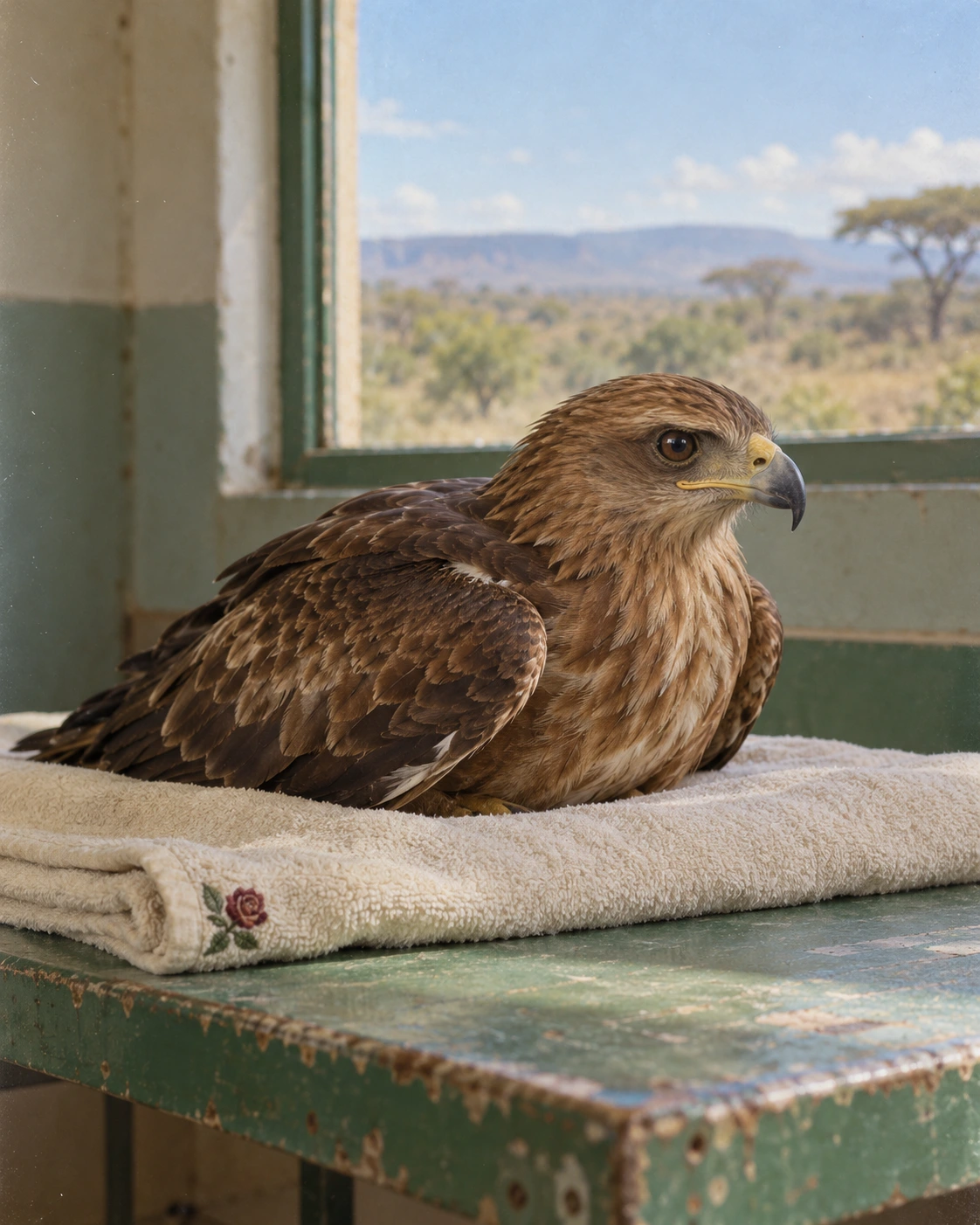
At Soysambu Conservancy, 18 power poles now wear equipment meant to stop a bird's body closing an electrical circuit. It is practical work: protective covers, technicians and ordinary hardware in the Rift Valley light. No gala dinner required. Good.
That count matters because it was missing when we first reported this story. On 9 August, The Peregrine Fund said 18 poles had been retrofitted with equipment donated by Kaddas Enterprises and TE Connectivity, with more planned using equipment from Sicame Group. Kenya Power had announced the five-year wildlife-protection partnership in June, beginning at Soysambu and training technical staff.
Progress is a number. Proof is a comparison.
Eighteen is not nothing. It is also not an outcome. The Peregrine Fund says researchers fitted 30 Augur Buzzards with tracking devices and six were electrocuted over several months. That is a brutal measure of the danger and a reason to move. The public account does not establish how those deaths line up with the retrofit dates or whether the treated poles have since reduced mortality.
The mechanism is plain enough. Raptors use tall poles to scan for prey. On unsafe designs, a bird touching live equipment and grounded metal can complete the circuit. The cost arrives in feathers and burned tissue, then travels to the carers who dress wounds and decide whether flight is still possible.
Kenya Power has a legitimate benefit too. Its public statement says wildlife contact contributes to outages, so safer infrastructure is meant to improve reliability as well as protect birds. That is the sensible bargain: fewer dead raptors, fewer faults and less repair work. Plastic covers are cheaper than pretending biology will learn electrical engineering.
The missing columns
The public record reviewed on 18 October still lacks three figures that would turn installation into evidence: raptor deaths before and after retrofit, outage performance on treated sections, and a dated plan for moving beyond the first 18 poles. The Peregrine Fund says more retrofits are planned. Kenya Power says lessons from Soysambu should inform wider rollout. Neither reviewed page supplies the timetable or the threshold for success.
That is not a reason to sneer at the pilot. It is a reason to measure it in daylight. Credit the engineers for fitting the covers. Credit the researchers for tracking birds. Then publish the scorecard, including bad news. A repair earns trust when the evidence can survive outside the press release.
The carers cannot wait for the spreadsheet
While the grid learns, Kenya Bird of Prey Trust still deals with injured and non-releasable birds. Its official Adopt a Raptor route remains active from US$5 monthly and says support helps cover food, enclosure maintenance, enrichment, medical care and staff. That is a direct route to the people doing the repair work now. The Rose Mission holds no funds, takes no commission and claims no partnership or guaranteed impact.
Eighteen safer poles are worth marking. The quiet next step is harder and more useful: show whether fewer birds fall, whether the lights stay on, and when the nineteenth pole gets its turn.
I’ll leave you today with a line from Kenya Bird of Prey Trust:“Good science guides effective conservation work.”
Sources & ways to help
Help cover a raptor's ongoing care →Official Kenya Bird of Prey Trust route, checked 18 October 2026.
Read the 18-pole and tracking report →The Peregrine Fund, 9 August 2026.
Read Kenya Power's project response →Kenya Power, 18 June 2026.
Read the independent Kenyan report →Citizen Digital, 18 June 2026; last successfully reviewed 17 October 2026.
Read the original Rose Mission investigation →Published 3 October 2026.
Follow the thread